
When foreclosure notices start arriving in Edison, Middlesex County, or anywhere else in New Jersey, it can feel like you are running out of choices. You may be dealing with missed mortgage payments, legal letters, rising fees, and uncertainty about what happens next.
You’re not alone. Job loss, medical expenses, divorce, an inherited property, or a difficult move can put homeowners behind : often while several other problems are already on their plate.
The good news is that New Jersey’s foreclosure process takes time, and you may have more than one way to move forward. Depending on your situation, you may be able to keep the house, negotiate with your lender, or sell before the sheriff’s sale.
What Should You Do First When Facing Foreclosure in NJ?
The first step is to identify exactly where you are in the process.
New Jersey uses a judicial foreclosure process. This means the lender generally has to file a lawsuit and obtain a judgment before the property can be sold at a sheriff’s sale.
You may receive:
- Late payment notices : These usually come after missed mortgage payments.
- A Notice of Intention to Foreclose : New Jersey residential mortgage lenders must generally provide at least 30 days’ notice before beginning a foreclosure action.
- A foreclosure complaint : This starts the court case.
- A final judgment : The court determines what is owed and authorizes the next steps.
- A writ of execution : This directs the county sheriff to schedule a sale.
- A sheriff’s sale notice : This gives you the scheduled auction date.
Do not ignore these documents.
Check the dates, save every letter, and contact your mortgage servicer to ask for a current reinstatement or payoff amount. If you have been served with a complaint, consider speaking with a New Jersey foreclosure attorney or a HUD-approved housing counselor.
How Long Does Foreclosure Take in Middlesex County and Edison, NJ?
There is no single timeline for every homeowner. A foreclosure may take months or considerably longer, depending on whether the case is contested, whether you enter mediation, and how quickly the court and sheriff process the case.
Some important New Jersey deadlines include:
- The lender generally must send a Notice of Intention to Foreclose at least 30 days before filing.
- After receiving a foreclosure complaint, you typically have 35 days to respond.
- After a writ of execution is issued, the sheriff generally has 150 days to conduct the sale.
- After the sheriff’s sale, the homeowner generally has 10 days to redeem the property or object to the sale.
Middlesex County publishes foreclosure sale information through its official sheriff’s foreclosure page. You can also review the county’s SalesWeb foreclosure listings for scheduled sale information.
A scheduled sheriff’s sale is a serious deadline. But it does not always mean every option has disappeared.
The earlier you act, the more control you may have over the outcome.
What Are Your Options for Stopping Foreclosure in New Jersey?
1. Bring the mortgage current
If your financial hardship was temporary, you may be able to cure or reinstate the loan.
This usually means paying:
- Missed mortgage payments
- Late fees and interest
- Legal fees
- Servicer costs
- Other charges listed in the reinstatement quote
Ask your lender for the exact amount in writing. The amount can change as additional interest and legal expenses accumulate.
This option may work if you have access to enough money through savings, an inheritance, a tax refund, or another source. If paying the full amount is not realistic, look at the other choices below.
2. Request a loan modification or repayment plan
A loan modification changes the terms of your mortgage. Depending on your financial situation, the lender may consider:
- Lowering the interest rate
- Extending the loan term
- Adding missed payments to the loan balance
- Creating a repayment plan
- Reviewing other loss-mitigation programs
Contact your lender’s loss-mitigation department as soon as possible. Be prepared to provide income information, bank statements, tax returns, and a written explanation of your hardship.
A modification can make sense when you want to keep the home and can afford a sustainable payment going forward.
3. Ask about foreclosure mediation
New Jersey homeowners may be able to participate in foreclosure mediation. Mediation gives you a structured opportunity to discuss possible solutions with your lender.
Depending on your situation, those solutions may include:
- A loan modification
- A repayment agreement
- Reinstatement
- A short sale
- Another loss-mitigation arrangement
Deadlines apply, and eligibility can depend on the property and the stage of the foreclosure. A housing counselor or attorney can explain how to request mediation and what documents to prepare.

4. Speak with a foreclosure attorney or housing counselor
Foreclosure paperwork can be difficult to understand, especially when you are trying to manage work, family, and financial stress at the same time.
A qualified professional can help you:
- Understand your current foreclosure stage
- Review the lender’s calculations
- Identify deadlines
- Evaluate bankruptcy or mediation
- Determine whether a short sale is possible
- Coordinate a sale before the sheriff’s auction
You can review foreclosure information from the New Jersey Department of Community Affairs and the New Jersey Courts foreclosure resources.
Legal and housing guidance is especially important if you are close to a sheriff’s sale.
5. List the home with a real estate agent
A traditional listing may help you reach more buyers and potentially maximize the market price. However, it can also take time.
A typical sale may involve:
- Repairs and cleaning
- Staging and professional photographs
- Showings
- Buyer negotiations
- Inspections and appraisals
- Mortgage approval
- Possible delays or contract cancellations
If you have several months before a sheriff’s sale, a traditional listing may be worth considering. If your deadline is only a few weeks away, the timeline may be difficult to manage.
6. Sell the house fast to a cash buyer
For homeowners searching “sell my house fast NJ,” a cash sale can provide a more direct alternative to the traditional process.
Cash buyers may purchase homes:
- In poor condition
- With major repairs needed
- Without cleaning or staging
- With unwanted belongings
- As inherited properties
- With tenants or difficult landlord situations
- When the owner is relocating or facing financial pressure
A cash sale does not automatically stop foreclosure. The sale must close before the sheriff’s sale, and the proceeds must be sufficient to satisfy the lender’s payoff and other required costs.
That is why timing and coordination matter.
How Does a Cash Sale Work in Edison or Middlesex County?
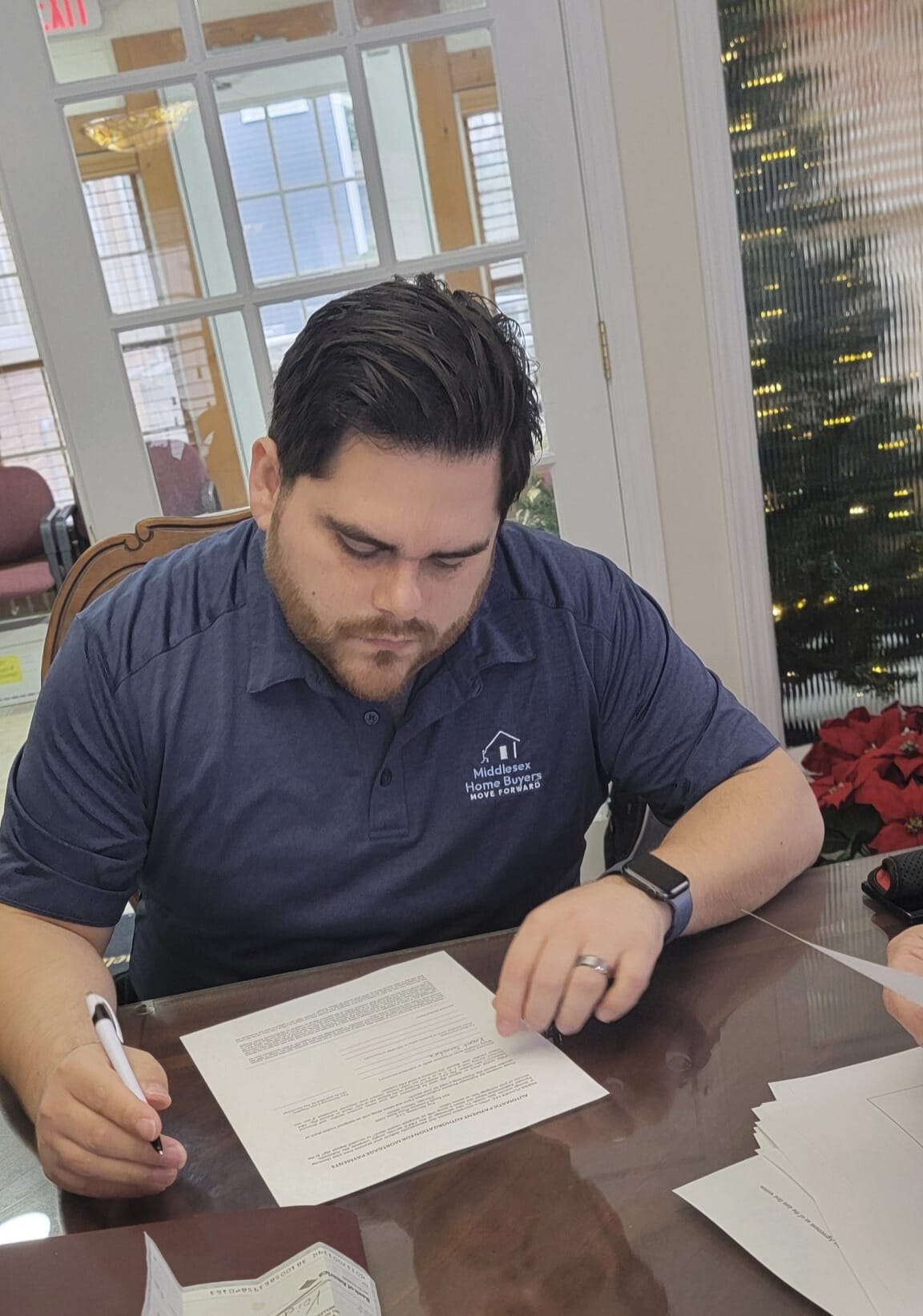
At Middlesex Home Buyers, the process is designed to give homeowners clarity before making a decision.
Here’s how it works:
Share basic information about the property
Tell us where the house is located, what condition it is in, and what timeline you are facing.Review a fair all-cash offer within 24 hours
We look at the property’s location, condition, and estimated costs. The offer is no-obligation.Choose your closing date
We can close in as little as 7 days, or work with your preferred timeline when more time is needed.Coordinate the payoff and closing
The title company handles the closing process and pays the required payoff from the sale proceeds.
We buy houses in Middlesex County, Edison, and throughout New Jersey. You do not need to make repairs or clean the property before contacting us.
What Costs Can You Avoid When You Sell House As-Is in NJ?
Selling traditionally can involve expenses before and during the listing. These may include repairs, ongoing mortgage payments, utilities, insurance, staging, and agent commissions.
With Middlesex Home Buyers:
- No repairs are required
- No cleaning or staging is required
- No agent commissions
- We pay standard closing costs
- You choose the closing timeline
- You receive a fair cash offer within 24 hours
A cash offer may be lower than a theoretical retail price after a fully renovated listing. In return, you may avoid months of waiting, repair expenses, financing contingencies, and the risk of losing valuable time before a sheriff’s sale.
The right choice depends on your equity, deadline, loan balance, and personal priorities.
Can Selling Your House Stop Foreclosure?
Selling may stop the foreclosure process if the property closes before the sheriff’s sale and the lender receives the amount required to satisfy the debt.
Before signing a contract, confirm:
- The scheduled sheriff’s sale date
- The current mortgage payoff
- The foreclosure judgment amount, if applicable
- Any tax, lien, or utility balances
- Whether there is enough equity to complete the sale
- How the title company will coordinate with the lender
If the sheriff’s sale has already happened, New Jersey generally provides a 10-day redemption period. This situation is highly time-sensitive. Speak with a foreclosure attorney immediately before relying on a private sale or redemption strategy.
Get Clarity Before Choosing Your Next Step
Foreclosure can make every decision feel urgent. But you still have options, and you do not have to choose one without understanding the numbers.
If selling may be the right path, contact Middlesex Home Buyers for a no-obligation cash offer. We buy houses in NJ as-is, pay all standard closing costs, charge zero agent commissions, and can close in as little as 7 days or on your timeline.
You’re not alone in this situation. When you’re ready, get the information you need to move forward with more certainty.
This article is for general educational purposes and is not legal, tax, or financial advice. Foreclosure rules and deadlines can vary. Consult a qualified New Jersey attorney, housing counselor, lender, or title professional about your specific circumstances.
